
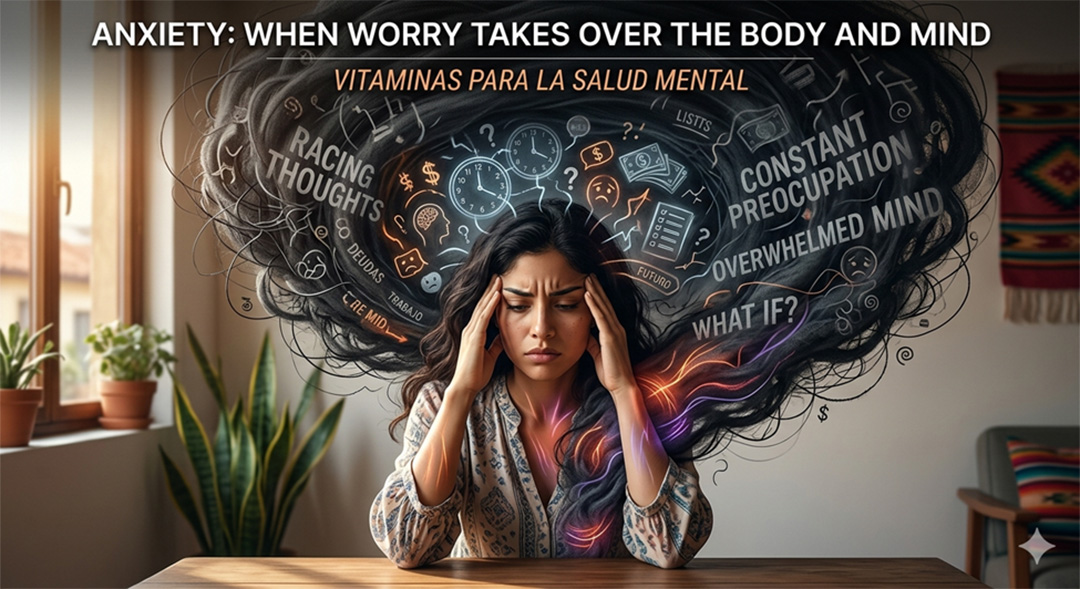
Anxiety is a normal and necessary human feeling. Everyone worries sometimes. But when fear or worry becomes constant, intense, or difficult to control, it can start affecting daily life. Many people in Latino communities describe anxiety as a mind with racing thoughts, a tight chest, an upset stomach, or feeling “on edge”, desperate all the time.
Anxiety can be triggered by work pressure, family responsibilities, immigration concerns, money problems, labor stress, or unsafe environments. For some people, anxiety also develops after trauma. Because many families are used to pushing through stress and ignoring it, anxiety may be hidden for a long time before a person asks for help.
Common signs of anxiety include:
- Constant worrying.
- Trouble sleeping.
- Fast heartbeat.
- Muscle tension.
- Stomach problems.
- Feeling restless or unable to relax.
- Fear of bad things happening.
- Avoiding people, places, or situations.
Anxiety can also affect decision-making and relationships. A person may become irritable, overly controlling, or withdrawn. Sometimes family members think the person is being dramatic, lazy, or difficult, when in reality they are struggling with fear.
There are many healthy ways to manage anxiety:
- Breathe slowly and deeply.
- Take breaks from news or social media.
- Exercise or walk regularly.
- Reduce caffeine if it makes symptoms worse.
- Write down worries and sort them into what you can and cannot control.
- Talk to a therapist, counselor, or doctor if symptoms continue.
- Call us at: (510) 788-1855
Anxiety does not mean something is wrong with you. It means your body and mind are asking for support. With the right care, people can learn to feel calmer, safer, and more in control.
Reflection question: What does anxiety feel like in your body, and what helps you calm down?
Javier Nunton, MSW