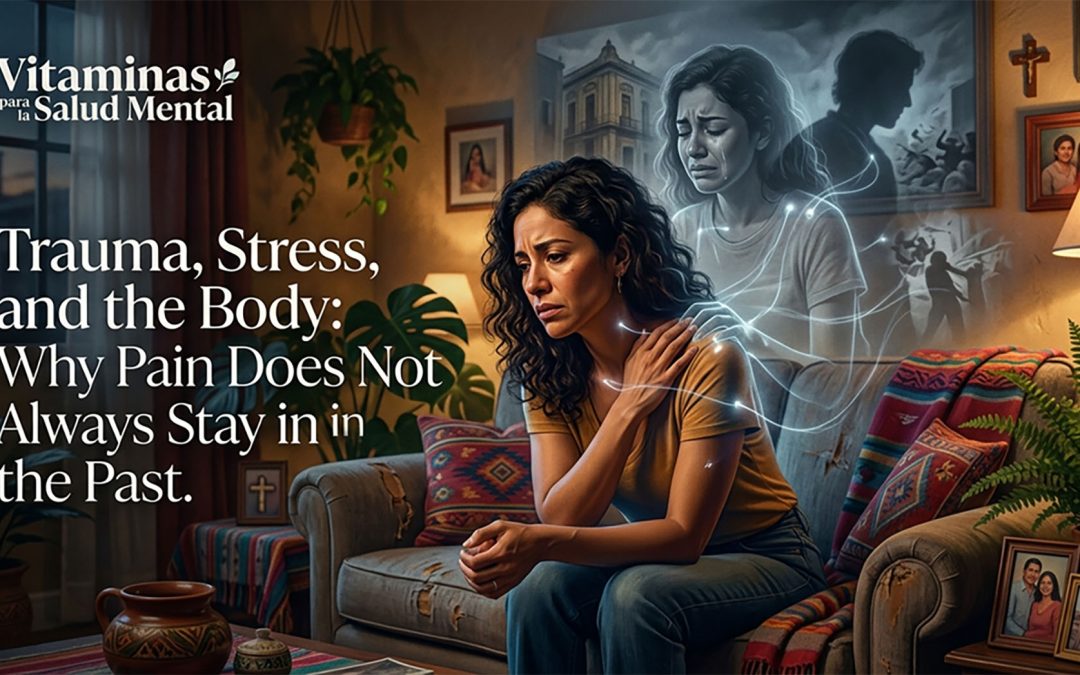
Trauma is not only about what happened. It is also about how a person’s body and mind responded to an experience that felt overwhelming, frightening, or unsafe. A traumatic event may be violence, abuse, neglect, a serious accident, sudden loss, or even ongoing stress like family separation, infidelity, immigration fear, or unsafe work conditions.
Many people think trauma ends when the event is over. In reality, trauma can stay in the body and show up later as anxiety, anger, numbness, sleep problems, or physical pain. Some people become hyper alert and feel like they cannot relax. Others shut down emotionally and feel disconnected from themselves or the people around them.
In Latino communities, trauma is sometimes normalized because many people have had to survive difficult experiences. People may say, “así es la vida” or “hay que aguantar.” But surviving is not the same as healing. Unresolved trauma can affect parenting, relationships, work, health, and self-esteem.
Common signs of trauma can include:
- Nightmares or flashbacks.
- Feeling jumpy or easily startled.
- Avoiding reminders of the event.
- Emotional numbness.
- Anger or irritability.
- Trouble trusting others.
- Headaches, stomach pain, or fatigue.
Healing from trauma often takes time and support. Helpful steps may include:
- Talking with a trauma-informed therapist.
- Building safety and routine.
- Sleeping, eating, and moving the body regularly.
- Practicing grounding exercises.
- Connecting with supportive people.
- Being patient with yourself.
- Call us at: (510) 788-1855
Trauma is not a sign of weakness. It is a sign that something overwhelming happened, and the nervous system is still trying to protect you. Healing is possible, even after very painful experiences.
Reflection question: What would healing look like if your body no longer had to stay in survival mode?
Javier Nunton, MSW