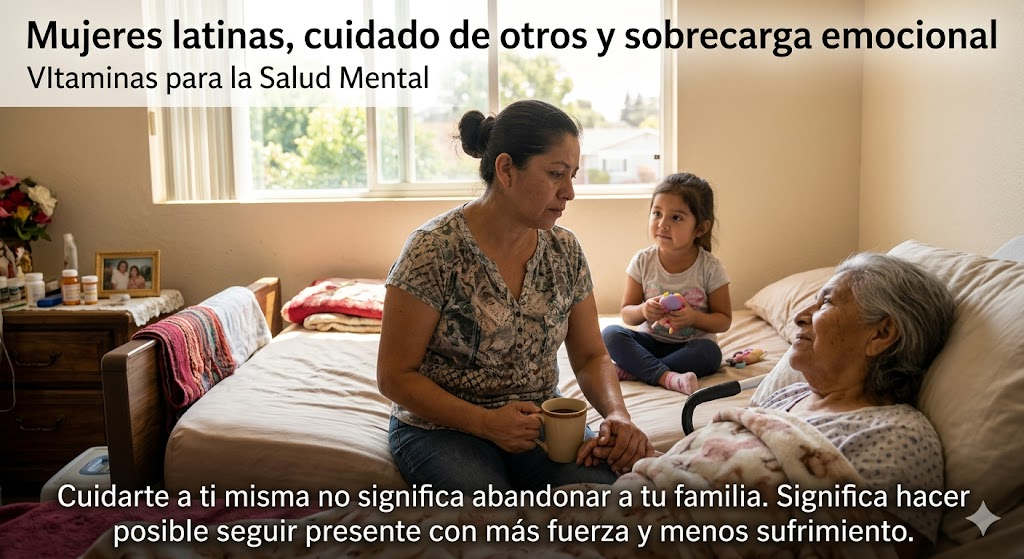
Many Latino women carry a heavy emotional load. They may be caring for children, partners, parents, or grandchildren while also working, managing the home, and supporting everyone else’s needs. Over time, this constant responsibility can lead to exhaustion, resentment, guilt, sadness, and burnout. Even when women are struggling, they may still feel expected to keep going without complaint.
Caregiving is meaningful, but it can become overwhelming when there is no rest, help, or recognition. Many women are taught to put family first and sacrifice their own needs. Some feel guilty taking time for themselves. Others worry that speaking up will seem selfish. But chronic emotional overload is not a sign of weakness — it is a sign that support is needed.
Signs of emotional overload can include:
- Feeling tired all the time.
- Crying often or feeling numb.
- Irritability or impatience.
- Trouble sleeping.
- Headaches, body pain, or stomach issues.
- Feeling like no one notices how much you do.
- Losing interest in things that used to bring joy.
Women may also carry hidden grief, trauma, relationship stress, or immigration-related fears while still appearing strong to others. This can make it hard to ask for help. Yet support is essential. Rest, boundaries, therapy, spiritual connection, trusted friendships, and shared responsibility can all play a role in healing.
Women deserve care, not just the expectation to give care. Emotional wellness improves when women are allowed to rest, speak honestly, and receive support without guilt. Taking care of yourself does not mean abandoning your family. It means making it possible to keep showing up with more strength and less suffering.
Reflection question: What is one responsibility you could share, reduce, or release this week?
Javier Nunton, MSW