Suicide is a difficult subject, but silence does not protect people. Talking openly, respectfully, and without judgment can help someone feel less alone and more willing to accept support.
Latino people in the United States may face many sources of stress that affect mental health: financial pressure, discrimination, immigration-related fears, separation from family, language barriers, trauma, loneliness, family conflict, and stigma about asking for help. These challenges do not cause suicide by themselves. Suicide is complex, and it can affect people of any age, gender, income level, religion, sexual orientation, immigration status, or family background.
Many people who are struggling do not say directly, “I want to die.” They may say:
- “I am tired of everything.”
- “My family would be better off without me.”
- “I do not see a future.”
- “I cannot take this anymore.”
- “I want to disappear.”
- “Nobody would miss me.”
These statements should always be taken seriously. Other warning signs can include withdrawing from family or friends, giving away valued belongings, sudden changes in mood, sleeping much more or less than usual, increased alcohol or drug use, reckless behavior, intense agitation, or looking for ways to die. Warning signs are especially concerning when they are new, worsening, or follow a painful loss, major conflict, or life change.
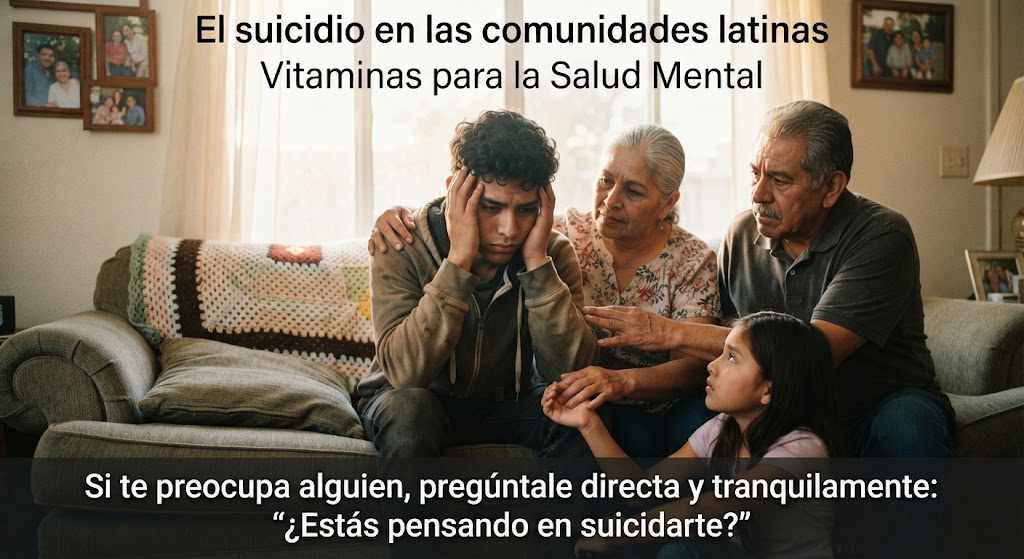
If you are worried about someone, ask directly and calmly: “Are you thinking about killing yourself?” Asking this question does not put the idea into someone’s mind. It gives them an opportunity to tell the truth and receive support.
If they say yes, or you believe they may be in immediate danger:
- Stay with them or help them connect with a safe adult.
- Do not leave them alone if there is immediate risk.
- Reduce access to items that could be used for self-harm, if you can do so safely.
- Call or text 988 in the United States for confidential crisis support.
- If there is immediate, life-threatening danger, call 911 or go to the nearest emergency department.
- In Contra Costa County call: 211
- Do not promise to keep suicidal thoughts a secret.
The person does not have to face a crisis alone. A trusted family member, friend, faith leader, school counselor, therapist, doctor, or crisis counselor can help create the next safe step.
For Latino families, it is important to replace shame with compassion. Saying “échale ganas” may be well-intended, but it may not be enough when someone is in deep pain. Try saying: “I love you. I believe you. You do not have to handle this alone. Let’s get help together.”
Suicide can be prevented. Connection, listening, professional support, and timely action can save lives.
Reflection question: If someone you loved said, “I do not want to be here anymore,” what could you say that would help them feel heard and safe?
Javier Nunton, MSW