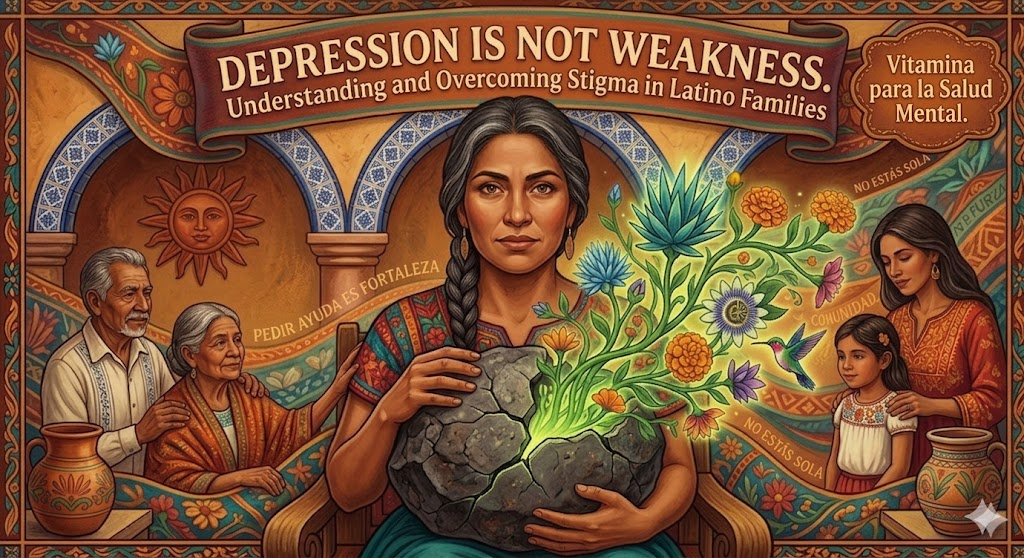
Depression is more than feeling sad for a few days. It can affect how a person sleeps, eats, thinks, works, and connects with others. In many Latino families, people may say, “échale ganas” or try to stay strong for everyone else; however, depression is not something a person can simply ignore or overcome by force.
Depression can look different from person to person. Some people cry often. Others feel tired all the time, lose interest in family activities, become irritable, or have headaches and/or stomach pain. In our communities, emotional pain is sometimes shown through the body, which means depression may not always sound like “I feel sad.” It may sound like “no tengo energía ( I don’t have energy),” “me duele todo (I’m in total pain),” or “ya no quiero hacer nada (I don’t want to do anything).”
Family, work stress, financial problems, immigration worries, discrimination, and loneliness can all make depression worse. People who have been through trauma or who feel pressure to always be strong may be especially vulnerable. Depression is not a personal failure, and it does not mean a person is weak or ungrateful.
Signs that depression may be present include:
- Loss of interest in things once enjoyed.
- Sleeping too much or too little.
- Changes in appetite.
- Feeling hopeless or empty.
- Trouble concentrating.
- Withdrawing from family and friends.
- Feeling guilty, ashamed, or worthless.
What can help?
- Talk to someone you trust.
- Keep a daily routine, even a simple one.
- Take walks, eat regularly, and rest.
- Limit alcohol or drugs, which can make depression worse.
- Reach out to a mental health professional if symptoms last more than two weeks.
- Call us at: 510-788-1855
If someone says they want to disappear, feels like a burden, or talks about death, take it seriously and seek immediate help. Depression can be treated, and recovery is possible. Asking for help is not a sign of weakness…it is an act of courage.
Reflection question:
What messages about depression did you grow up hearing, and which ones do you want to change for the next generation?
Javier Nunton, MSW