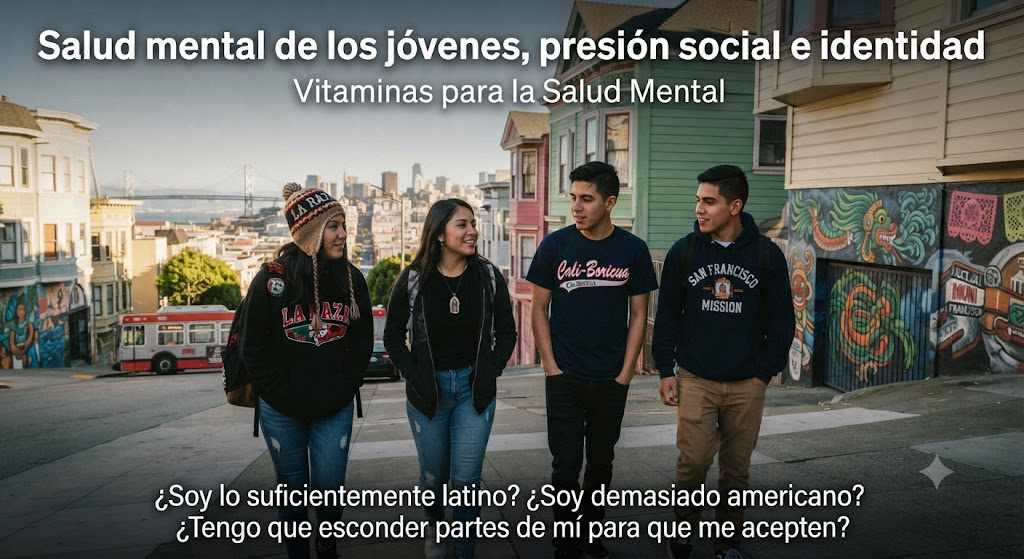
Today’s Latino youth are growing up in a world full of pressure. They may feel pressure to succeed in school, help their families, fit in socially, look a certain way, and balance expectations from both home and the outside world. In addition, there are many young immigrants who are starting a new life in this country who may face racism, bullying, language struggles, immigration stress, and social media comparison.
For many young people, identity is a major mental health issue. They may wonder: Am I Latino enough? Am I too American? Do I need to hide parts of myself to be accepted? These questions can be painful, especially when a young person feels misunderstood by both peers and family members.
Social pressure can show up as anxiety, depression, irritability, perfectionism, withdrawal, or risky behavior. Some youth try to seem fine while secretly feeling overwhelmed. Others may stop talking to family because they do not feel safe expressing their emotions. When adults dismiss their experiences, young people may believe their feelings do not matter.
Signs a young person may be struggling include:
- Sudden changes in mood or behavior.
- Pulling away from friends or family.
- Falling grades or loss of motivation.
- Trouble sleeping.
- Increased anger or sadness.
- Excessive phone use, isolation, or risk-taking.
- Talking about feeling worthless or hopeless.
Youth need spaces where they can be honest without being judged. They need adults who listen, ask questions, and take emotions seriously. Support can include counseling, school resources, healthy routines, movement, creative outlets, and trusted mentors.
Identity does not have to be a battle. Young people can learn that they do not need to choose between cultures, families, or parts of themselves. A strong identity grows when youth are allowed to be seen, heard, and supported.
Reflection question: What is one thing young people in your community need adults to understand better?
Javier Nunton, MSW